
Last updated November 21, 2026
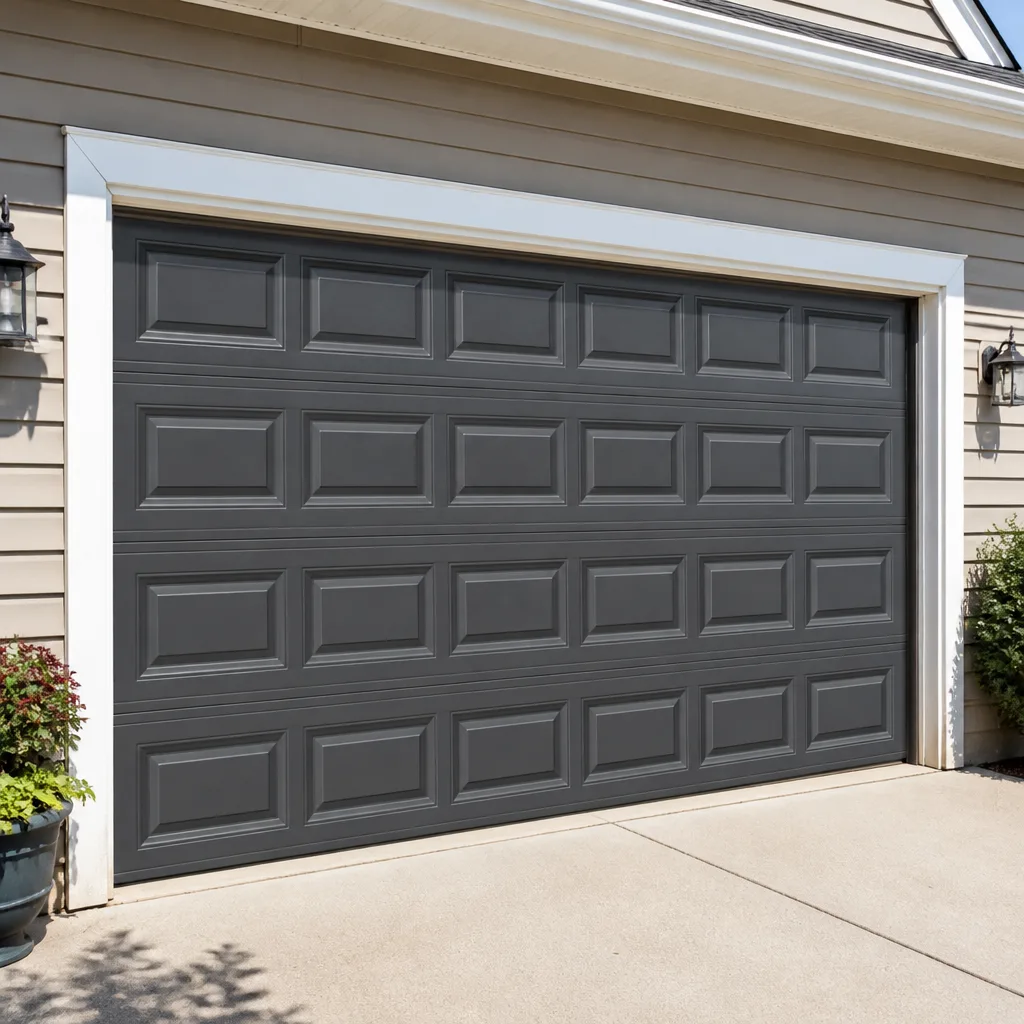 Raised-panel steel
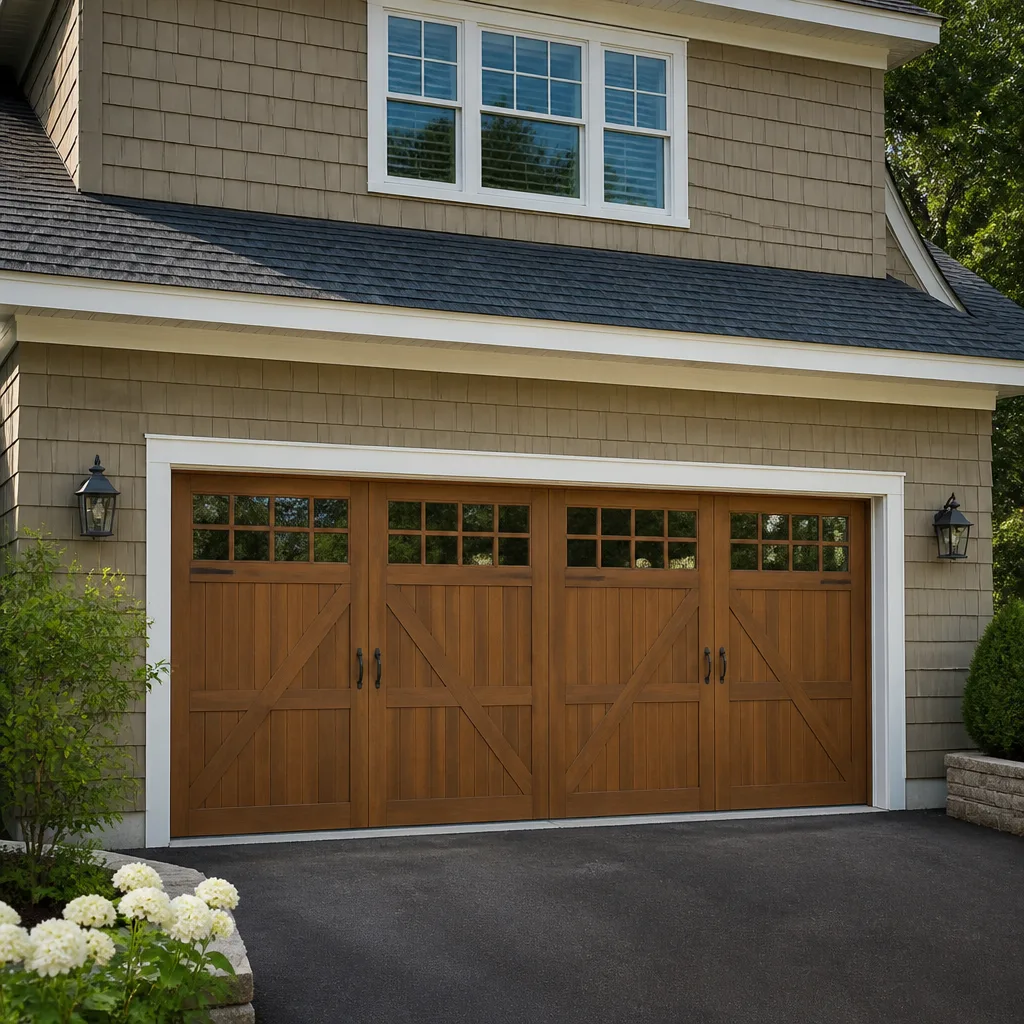 Carriage house
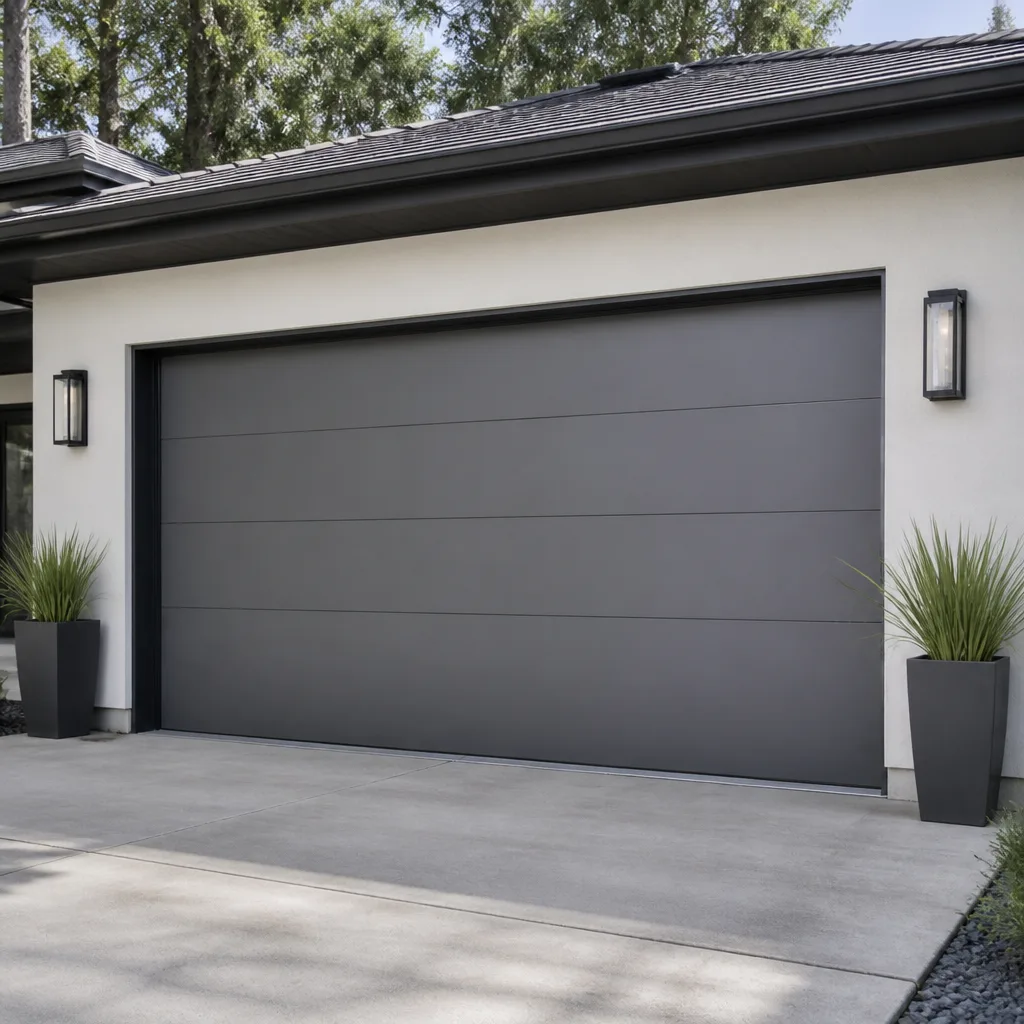 Modern flush
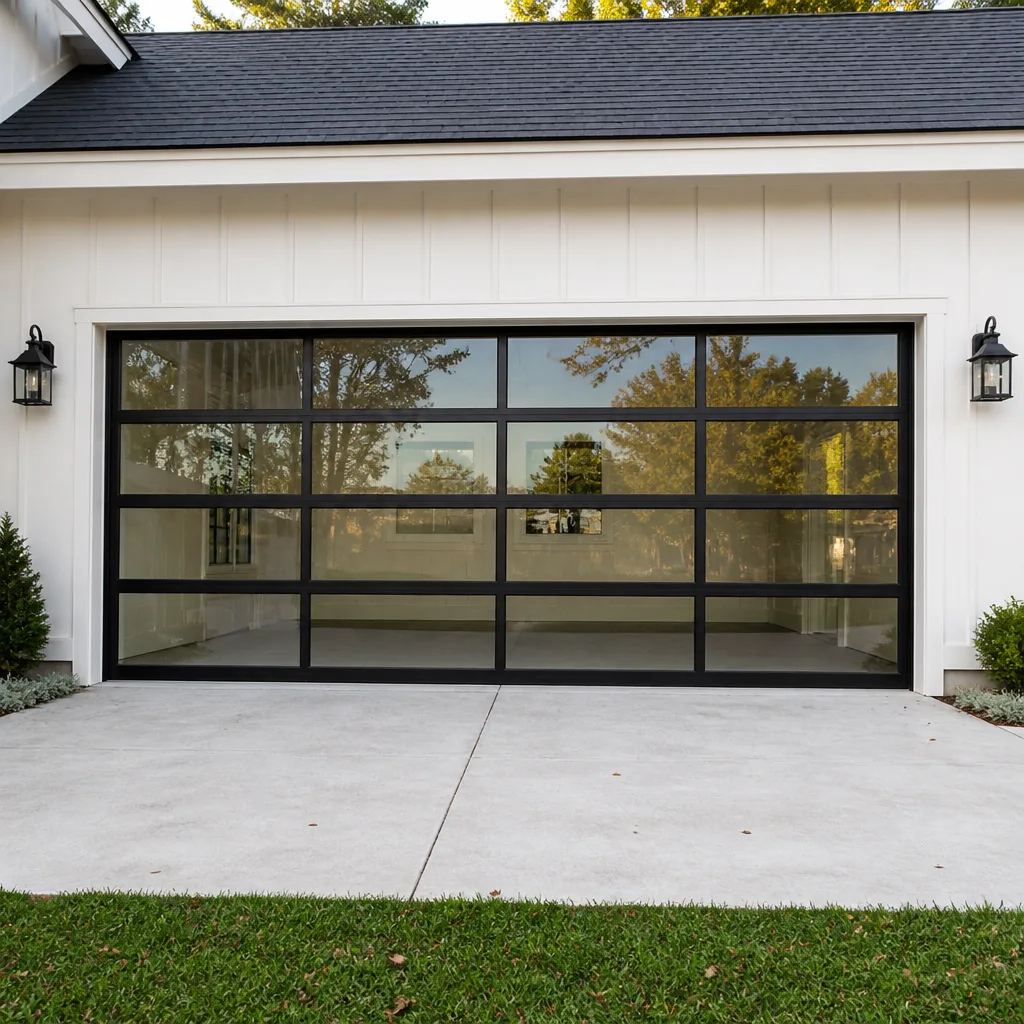 Full-view glass
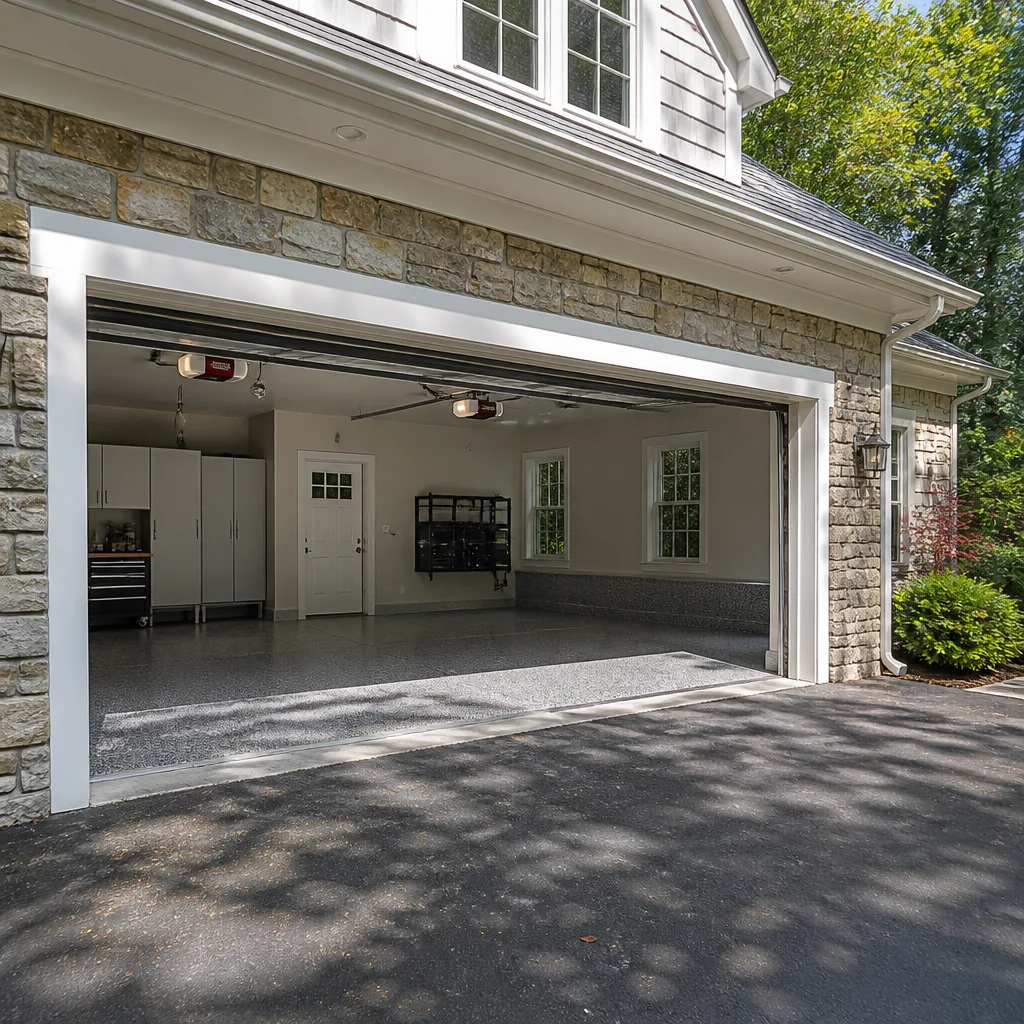 LiftMaster openers
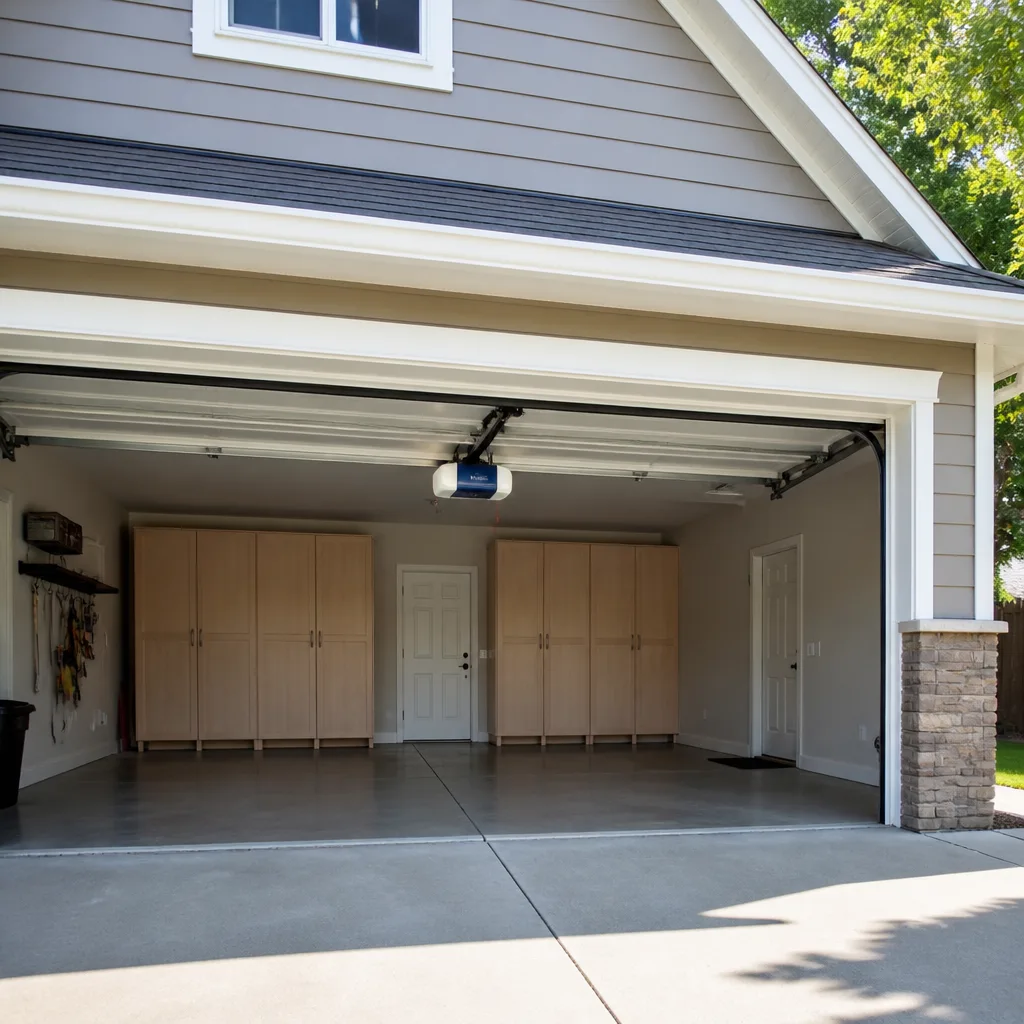 Chamberlain openers
Full 25-point door and opener safety check with every visit - springs, cables, rollers, tracks, and your LiftMaster or Chamberlain opener included
You get a price before we start. It does not change when the pro arrives.
Get your free estimateThe Complete Guide to Garage Doors in Belair-Edison
Most garage door guides are written for a generic suburban house with a deep garage, a clean concrete floor and a door that has never seen a hard winter. Belair-Edison isn’t generic. The housing stock here runs from mid-century brick ranchers to postwar detached homes, and the garages that came with them were built to different tolerances than what you’ll find in newer subdivisions. That gap between generic advice and your actual door is where repairs get missed, small problems turn into big ones, and money gets wasted on the wrong fix. This guide starts from the conditions on the ground in Belair-Edison, not from a template. You’ll learn how the local climate cycles age specific parts, which door configurations you’re most likely to be dealing with, how to tell in about ten minutes whether your door needs a repair or a replacement, and which components you should never touch yourself.
Quick Answer
Your garage door in Belair-Edison is most likely a single, low-headroom setup with a torsion spring system that has aged faster than its label suggests, and the local humidity swings tend to hit bottom seals, wood panels and cables first. That means the most common fixes are spring replacement, seal and weatherstripping work, and opener repair rather than full replacement. A repair-first decision usually makes sense unless the door itself is failing structurally or the repair cost approaches the cost of a new door.
Styles & brands we work with
- Raised-panel steel
- Carriage house
- Modern flush
- Full-view glass
- LiftMaster openers
- Chamberlain openers
Table of Contents
- How Belair-Edison’s Humidity Cycles Age Your Door
- Common Garage Door Configurations in Belair-Edison Homes
- The Low-Headroom Problem and Your Real Options
- How to Read Your Door’s Condition in Under 10 Minutes
- Repair-First or Replace-First: The Decision Framework
- What You Can Inspect Yourself vs. What Needs a Technician
- Opener Problems and Brand-Specific Quirks
- A Practical Maintenance Rhythm for This Climate
How Belair-Edison’s Humidity Cycles Age Your Door
Baltimore-area air pulls a wide moisture swing across the year. Summers run humid and heavy, winters bring repeated freeze and thaw, and spring and fall sit in between, wetting and drying everything several times over. Garage doors live at the intersection of indoor and outdoor air, which means they take that cycle from both sides. Over enough seasons, that pattern picks its targets, and it picks them in the same order most times.
The bottom seal is the first casualty. It’s a rubber or vinyl strip that presses against the concrete floor and keeps weather out, and it flexes every single time the door moves. Add humidity softening it in summer and cold stiffening it in winter, and the seal cracks, flattens or pulls away from the door. Once it does, water reaches the bottom panel and the metal panel behind the seal.
Wood and composite panels are the next to show wear. Original wood doors in older Belair-Edison homes absorb moisture along the bottom edges and any spot where the finish has thinned. Left alone, that moisture feeds rot, and rot travels upward through the bottom rails before most homeowners notice it. A door that looks fine from the driveway can have a soft lower section you’d only find by pressing on it.
Cables are the third point of attack. The cables that run alongside each spring are steel and they’re under constant tension. Humidity and temperature cycling don’t destroy them overnight, but they do accelerate the surface wear and corrosion that will eventually take a strand or more with them. If a cable is frayed or rusted solid, that’s a genuine safety issue, covered below.
What this means in practice is that in Belair-Edison you should expect spring replacement, seal and weatherstripping work and occasional cable replacement as your door’s routine wear items, and you should expect them sooner than the typical national maintenance schedule assumes.
Common Garage Door Configurations in Belair-Edison Homes
Walk through Belair-Edison’s residential blocks and you’ll see the same handful of garage types over and over. The postwar detached homes and the mid-century brick ranchers dominate, and most of their garages were built for one car, one door, and one specific layout: a single-car garage with a low ceiling and a single-section or multi-section door on a track that hangs close to the ceiling.
That layout produces a specific set of characteristics worth knowing before anybody quotes you work:
- Single door, single bay. Most Belair-Edison garages have one door, not two. Repairs and replacement quotes are usually for a single unit, which keeps cost down compared with double-door homes.
- Low headroom. Older garages were framed tight. There’s often less vertical clearance between the top of the door and the ceiling than a standard high-lift setup wants, and that affects everything from spring choice to the type of opener that fits.
- Torsion springs. Most doors in these homes use torsion springs mounted on a horizontal shaft above the door, rather than extension springs running above the tracks. Torsion is the safer and longer-lived design, but it is also the one that requires a trained technician to replace.
- Wood, steel and older aluminum. You’ll find original wood doors in the older homes, steel and steel-backed panels in the postwar stock, and occasionally aluminum or composite replacements from decades past.
We ask about headroom and door type before we send anyone out because in this neighborhood those two facts determine almost everything else: the spring you need, the opener that fits, and whether a new door can even use the same track. A technician who shows up without knowing your door model is learning it on your dime. That doesn’t happen on our jobs, because our technicians work across the brands already installed in these homes and know the common configurations before the truck rolls.
The Low-Headroom Problem and Your Real Options
Low headroom is the single most overlooked issue in older Belair-Edison garages, and it’s the one that catches homeowners out when they’re told their door “should just fit.” A standard garage door needs a certain amount of vertical space above the door for the tracks to curve back into the garage. Older single-car garages often don’t have it, and when a contractor installs a standard door anyway, the result is a door that binds, wears its rollers and springs out early, or scrapes the ceiling every time it opens.
You have three real options, and the right one depends on your specific garage, not a generic rule:
- Low-headroom track and hardware. The door itself stays standard, but the track and the way it hangs is adapted to fit a tighter space. This is the cleanest fix where the door is otherwise sound.
- Different door height. Sometimes a slightly shorter door, matched to the opening, clears the problem entirely and avoids hardware compromises. It’s a normal adjustment in older garages, not a downgrade.
- A low-profile opener or a different opener design. If the clearance problem is the opener rather than the door, a jackshaft-style opener mounted on the side of the torsion shaft can free up ceiling space entirely. That’s a common fit in tight Belair-Edison garages where a ceiling-mounted rail simply won’t work.
None of this is guesswork for us. We’ve seen which configurations fit these garages and which ones don’t, and a free measure before any garage door installation tells us exactly which route your door needs. That measure costs nothing and prevents the most expensive mistake in the process: ordering a door that doesn’t fit the space it’s going into.
How to Read Your Door’s Condition in Under 10 Minutes
You can learn a lot about your garage door’s health without touching any of the dangerous parts. A visual walk-around and a simple balance test give you most of the information a service call would use to decide what needs attention. Do it once a season. It takes less time than a coffee break.
The visual check. Stand outside and look at the door with the lights on. Then do the same thing inside.
- Springs. Look at the torsion spring on the shaft above the door. A broken spring shows a visible gap in the coil, and the door usually won’t lift more than a few inches. Extension springs, if you have them, should have intact safety cables running through them. Don’t pull on or adjust either one.
- Cables. Look at the cables running down each side. Frayed strands, kinks or rust pitting mean the cable should be replaced by a technician. Never handle a cable under tension.
- Seal. Check the bottom seal for cracks, compression or uneven contact with the floor. Hold a dollar bill or a thin piece of paper in the gap and close the door; if it slides out easily, your seal isn’t doing its job.
- Panels and wood. Press gently on the bottom rail and lower corners of the door. Any softness, bubbling paint, or swelling in wood means moisture has been sitting there.
- Rollers and hinges. Worn or cracked rollers, or hinges that look bent or loose, show up as a door that jerks as it moves.
- Tracks. Run a hand along the tracks on the inside (they don’t move) and check for dents, gaps or anything obviously bent.
The balance test. With the door closed, pull the opener’s release handle so the door runs on its own, then lift it halfway by hand and let go. A door in good balance stays roughly where you let it go. A door that drops hard or won’t stay up has a spring or cable problem and should be left alone until a technician sees it.
What your results mean. A failing bottom seal or a soft spot in wood is a repair you can plan for. Any spring, cable or bracket issue is a safety call, and those get a technician. If the door passes the balance test and the visual check but still sounds wrong or opens unevenly, that’s worth a service call to diagnose before it gets worse. A free estimate from Garage Door Repair Belair-Edison will tell you exactly what you’re looking at.
Repair-First or Replace-First: The Decision Framework
The honest answer to “should I repair or replace” comes down to two inputs: what the repair costs relative to the door, and how old the door is. A repair is usually the right call when the door structure is sound and one or two components have failed. A replacement starts to make sense when the structure itself is failing, multiple systems are worn out at once, or the door is at the end of its expected life and repairs are piling up.
The way we think about it, in practical terms:
- One component failed, everything else healthy. Repair. A broken spring is a spring job, not a door problem. The same goes for a single opener failure or a torn bottom seal.
- Door balance and safety systems working, but the panels are weak. Often a repair, unless the weak panels are structural. Bottom rails that are soft on wood doors can sometimes be replaced without touching the rest.
- Multiple components failing within a short stretch. That’s a strong signal the door is at the end of its life. Springs, cables, rollers and an opener all failing within a year or two of each other usually means replacement is more economical in the long run.
- Rust that’s structural, or rot through the frame. Replacement territory. A repair that doesn’t address the underlying cause will be back.
- You want to modernize safety or insulation. Replacement is the honest answer, because a repair can’t add what a door doesn’t have. Modern doors include safety features older doors didn’t.
The key input is the age of the door, and the second is the cost of the repair vs. the cost of a new door. We tell homeowners which one makes sense for their specific door and give the reasoning, not just a number. Sometimes the answer is that a repair will get you another decade. Sometimes it’s that spending on the old door is throwing money after it. We’ll tell you which, and why. Read more about our garage door repair process if you want to see how a job typically goes.
What You Can Inspect Yourself vs. What Needs a Technician
The most expensive mistake in garage door ownership is deciding to “have a go” at a component that will hurt you if it goes wrong. Garage door springs and cables hold enormous stored energy. When one lets go without warning, it can take a finger, a hand or worse. That’s not a scare tactic. It’s the reason spring work is a specialist job, and the reason a competent generalist will not touch it.
Here’s the honest split.
You can safely do these:
- Visual inspection of springs, cables, tracks, rollers and seals (eyes only, no touching).
- Lubricating the tracks, rollers and hinges with a suitable garage door lubricant, if you’re comfortable doing it.
- Cleaning the door and the tracks.
- Replacing the bottom seal on some doors, where the fix is a straightforward push-in or slide-on strip and no tensioned parts are involved.
- Testing the door’s balance with the release handle, from a safe position.
- Testing the safety reverse on the opener by placing a length of wood or a brick under the closing door. It should reverse. If it doesn’t, stop using it and call.
Leave these to a technician:
- Replacing torsion or extension springs.
- Replacing cables, drums or the brackets at the bottom corners.
- Adjusting springs to correct door balance.
- Any repair on a door with a broken spring or a cable that’s clearly damaged.
- Opener wiring, sensor alignment work that requires accessing live electrical components, and opener replacement.
Our technicians handle spring repair in-house, because it’s one of the most safety-sensitive jobs in the whole trade, and it’s the one component we won’t talk a homeowner through. If you need it, we do it, and we do it safely. That’s the garage door opener repair guide if the opener is your problem rather than the door.
Opener Problems and Brand-Specific Quirks
Openers fail differently depending on the brand and generation. The most common residential openers in Belair-Edison homes come from a handful of manufacturers, and each one has its own known failure points. Knowing the brand before we arrive usually gets the diagnosis down to a few possibilities in the first minute.
- LiftMaster and Chamberlain. These share many components and are among the most common openers in the neighborhood. Sensor misalignment and remote pairing issues are frequent, and some older units need specific replacement parts as they age. If the door reverses for no reason, sensors are usually the culprit.
- Genie. Genie units vary widely by generation. Some have gear and sprocket wear points that produce a distinctive grinding sound before failure, and the fix is often a specific replacement part rather than a whole-unit swap.
- Raynor. Raynor openers and doors often come as a matched system, and the opener’s logic board or drive assembly is the usual wear point. A matched-system diagnosis saves a whole unit being replaced when a single part will do.
- Craftsman, Amarr and others. We work on the brand already in your garage, including these, so there’s no sending you to another contractor because the model is unfamiliar.
What we won’t do is tell you the whole opener needs replacing when it’s one sensor or one gear. An opener that’s a decade old but otherwise sound usually still has useful life in it, and a diagnostic visit tells you which part has failed and what it will cost to fix. If it turns out the opener is genuinely at the end of its life, we’ll say so and quote a replacement. Either way, the estimate is free and the price is set by the written quote before any work starts. If your door is stuck, call us. We answer 24/7. Fast dispatch from 7am to 7pm, Sunday through Friday, closed Saturday.
A Practical Maintenance Rhythm for This Climate
Given the humidity cycles in Belair-Edison, a garage door that gets a little attention every few months lasts noticeably longer than one that gets nothing. The rhythm we recommend to homeowners here is simple and doesn’t require any tools you don’t already own.
- Once a month. Walk around the door inside and out, checking the seal, the panels, the springs, the cables and the tracks. It takes five minutes and catches issues while they’re small.
- Once a season. Do the full visual inspection and the balance test described earlier. Also check that the door is closing flush against the floor and that the safety reverse works.
- Twice a year. Lubricate the tracks, rollers and hinges with a garage door lubricant. Clean the tracks. If you have wood panels, look closely at the bottom edges for moisture, bubbling paint or softness and touch up any failing finish promptly.
- Once a year. Have a technician inspect the door. Springs, cables and openers have wear points you can’t see from the outside, and a spring that hasn’t broken yet can be close to it. Catching that before it fails saves you a stuck car.
- After any major storm. Look for dents, misaligned panels and anything that’s shifted. If the door opens unevenly or looks out of square, stop using the opener until a technician looks at it.
This is the straightforward maintenance program for this climate. It doesn’t require any special knowledge, and it catches most of the significant failures before they happen.
Common Mistakes to Avoid
- Assuming “same as everywhere” advice applies here. Generic guides assume deeper garages and newer doors. In Belair-Edison’s older stock, headroom and door configuration make a real difference to what repair or replacement is actually viable, and planning around the wrong assumption is how homeowners end up with a track problem they didn’t have to have.
- Pulling or adjusting a garage door spring. Springs hold enough energy to injure you seriously, and you cannot see how close they are to failing. Every spring is a technician job, and any “how to” video that shows otherwise should be ignored.
- Replacing the opener when the door is the problem. A door that binds, jerks or opens unevenly is often a door or spring issue, not an opener issue. Diagnosing before replacing saves the cost of a whole unit and usually fixes the problem the first time.
- Ignoring a soft or bubbling bottom rail. In this climate, that softness is moisture already inside the wood. Left alone, rot climbs the door until the repair is much bigger than it would have been.
- Putting off a spring that’s failing slowly. A spring can be weakened without being broken. If your door suddenly feels heavier or opens unevenly, that’s a sign, not a small thing to live with.
- Having work done without a written quote first. Whatever the job, the price should be quoted and agreed before any work begins. If a contractor won’t give you a written estimate first, that’s the warning sign, not a convenience.
- Skipping the annual inspection because “it still works.” A door can be working but unsafe. Springs, cables, brackets and safety reverse are exactly the components that fail unexpectedly, and an annual inspection catches them while they’re still repairs.
See the difference
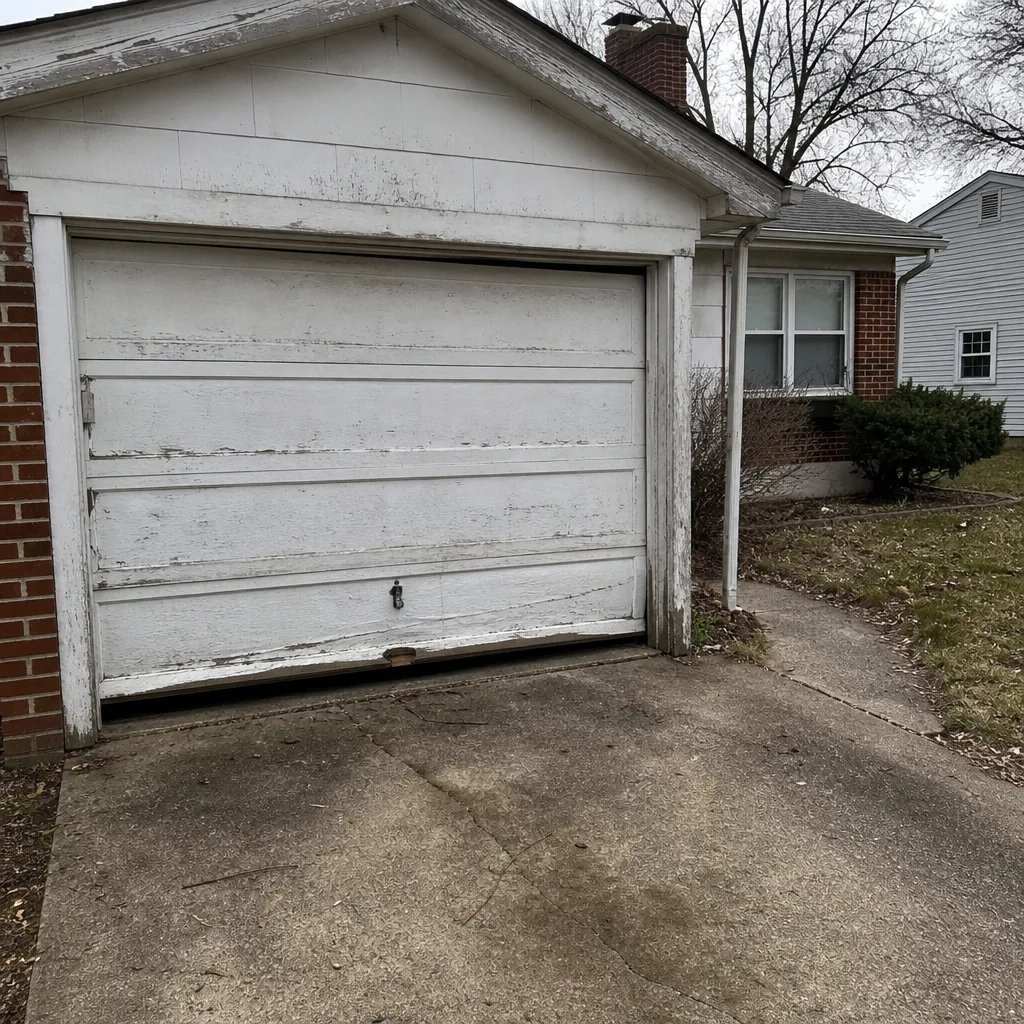 Before
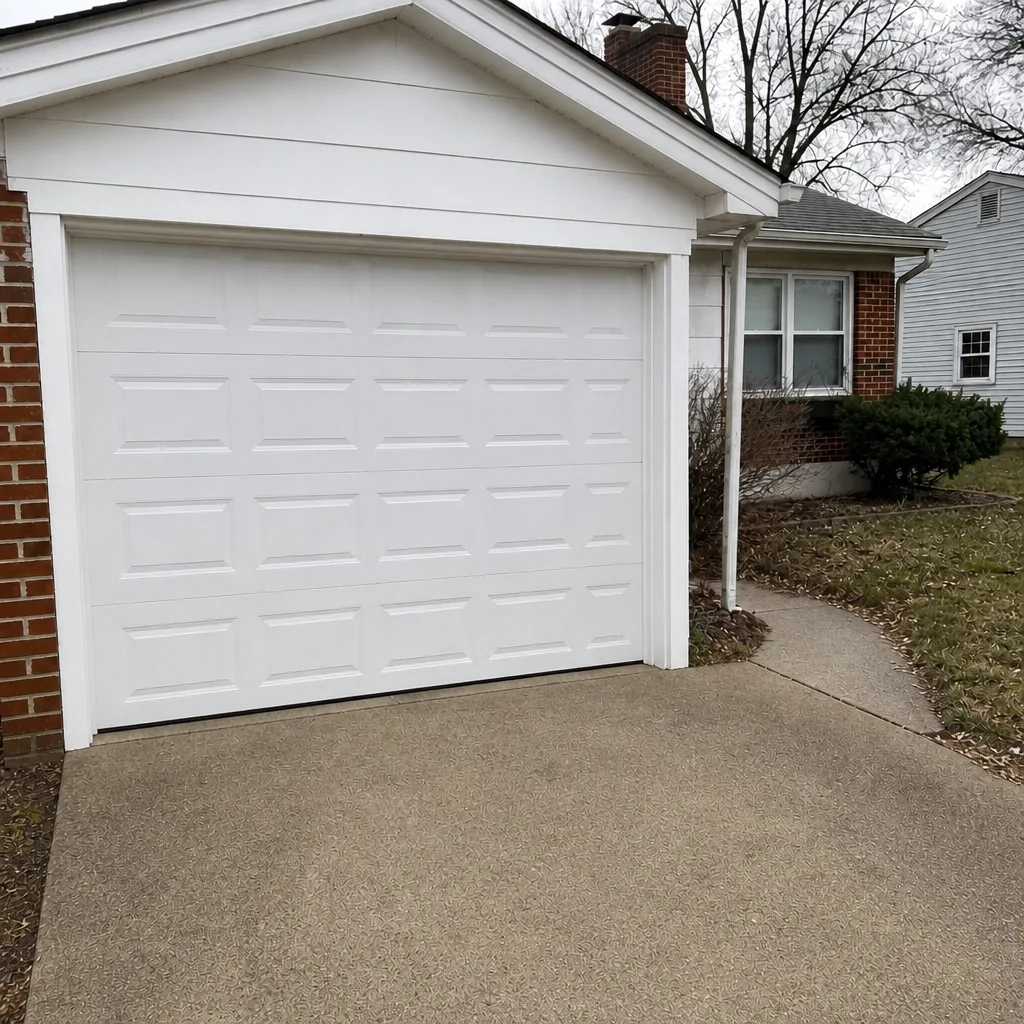 After
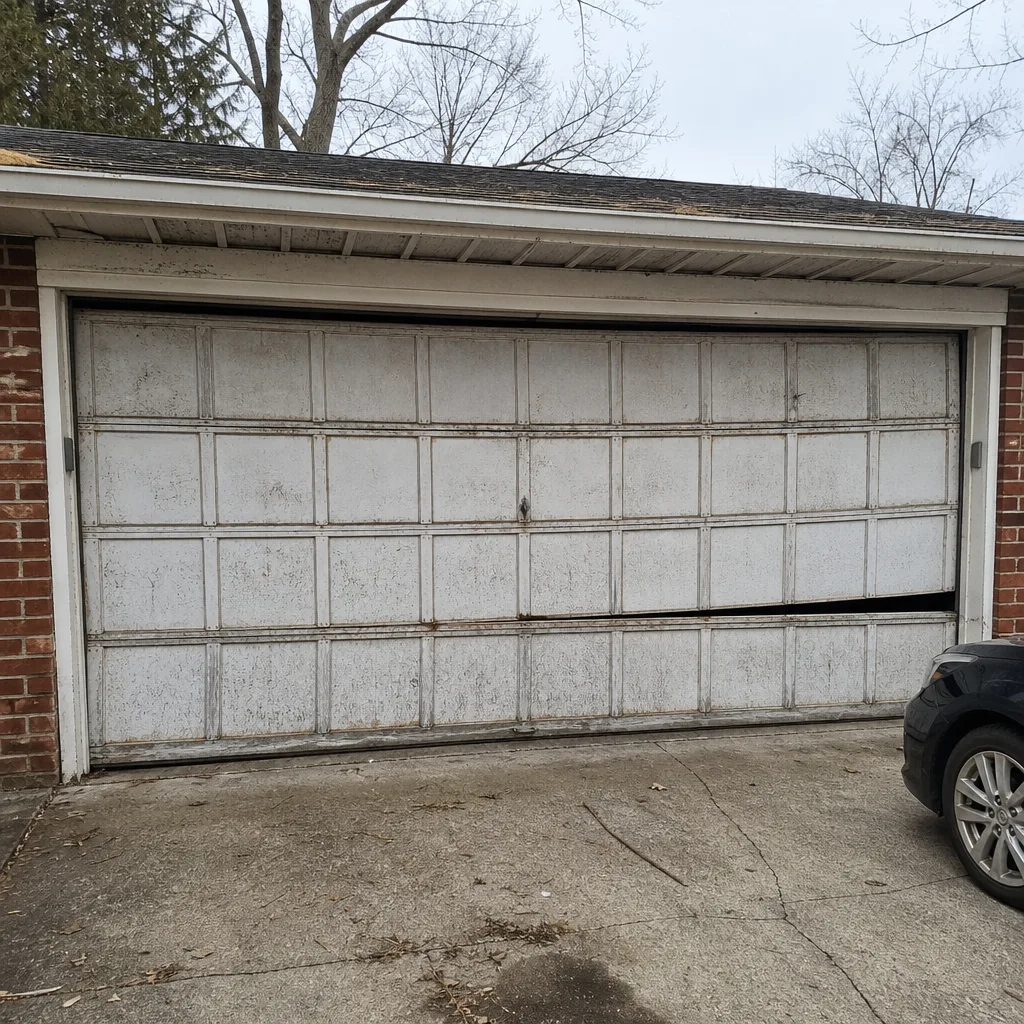 Before
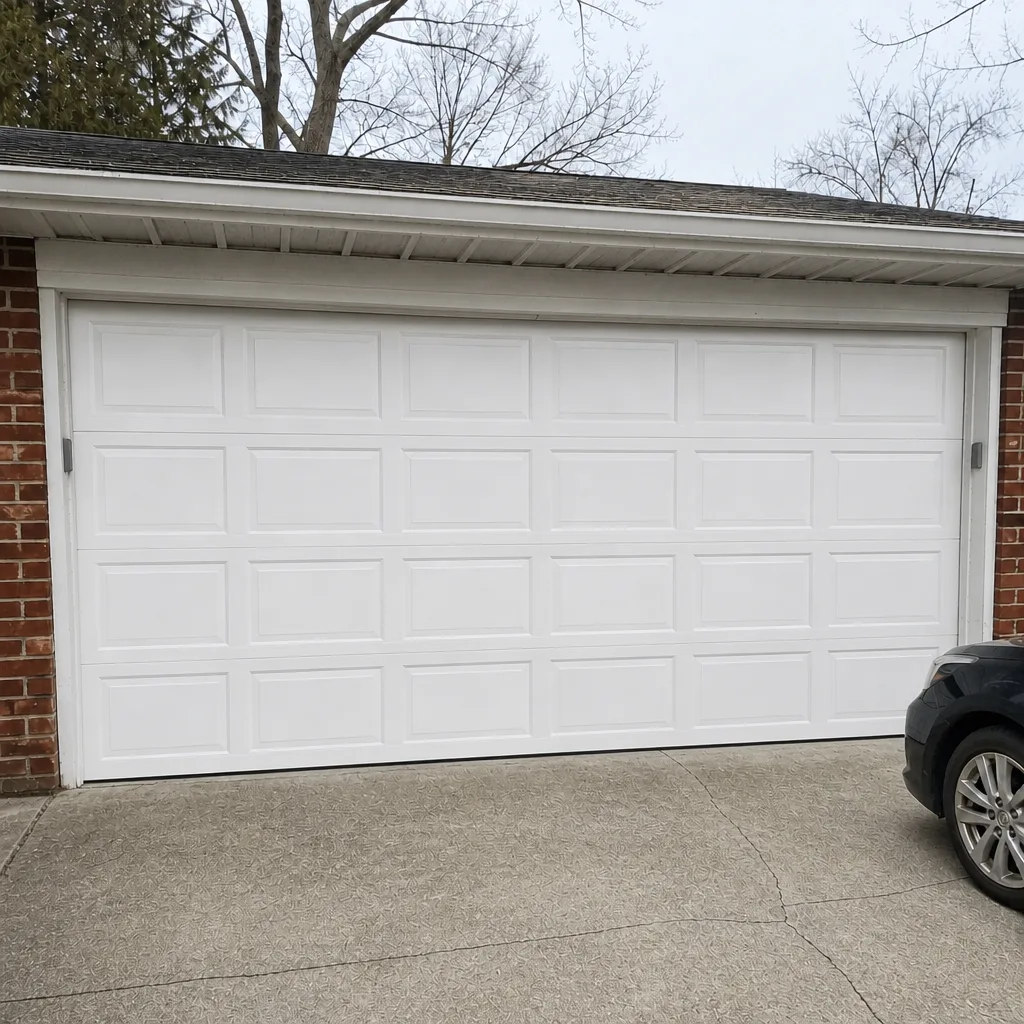 After
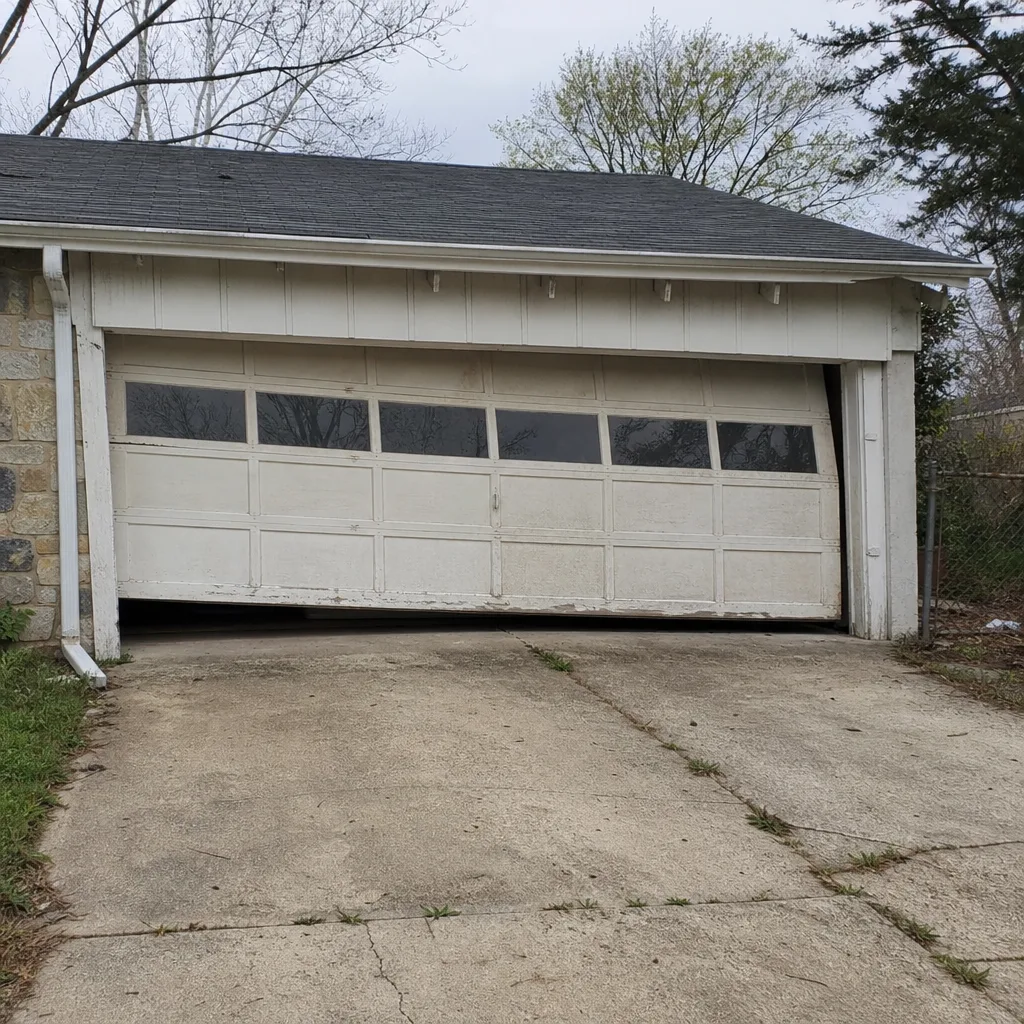 Before
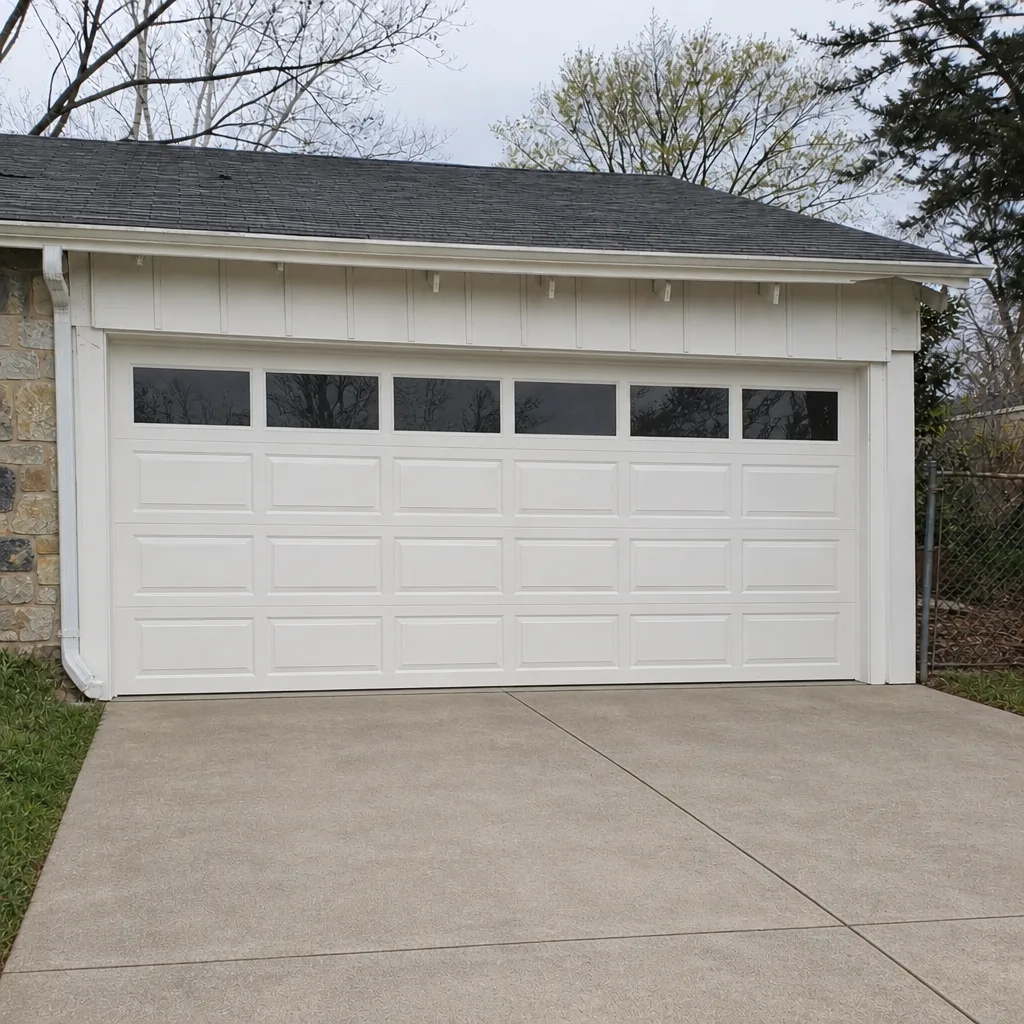 After
When to Call a Professional
Some garage door problems are genuinely urgent, and a few are actively dangerous. Call a professional right away if your door won’t open or close, if a spring has visibly broken, if a cable is frayed or hanging loose, if the door is hanging unevenly on its tracks, or if anything below the bottom bracket is damaged. Those are not jobs to inspect further. Do not use the opener if the door won’t move smoothly, and keep vehicles and children clear until a technician has looked at it.
Also call for an estimate if you want to know whether a repair makes sense, whether a new door fits your headroom, or what’s behind a door that’s gotten noisy or sluggish over time. Garage Door Repair Belair-Edison offers free estimates in Belair-Edison. Call (855) 337-1760. We answer 24/7, fast dispatch from 7am to 7pm, Sunday through Friday, closed Saturday. Our technicians have up to 12 years of experience.
Frequently Asked Questions
Repair is usually the right call when the door structure is sound and one or two components have failed, and replacement makes more sense when multiple systems are worn out at once or the structure itself is failing. In Belair-Edison’s older garages, headroom and the condition of the wood or steel panels are the deciding inputs. If your door is otherwise healthy, a broken spring is a repair, not a replacement. Call (855) 337-1760 for a free estimate and a straight answer on which route fits your door.
In many cases, yes. Spring and opener repairs can often be done the same visit, and we plan for that. Emergency service is a core part of what we do when a door won’t open or close and you’re stuck. We answer 24/7, fast dispatch from 7am to 7pm, Sunday through Friday, closed Saturday. Call (855) 337-1760 and we’ll book you into the next opening.
The Baltimore-area humidity swing softens the rubber seal in summer and stiffens it in winter, and the constant flexing wears it out faster than in a drier climate. Once the seal starts failing, moisture reaches the wood or steel panels behind it and starts the rot or rust process. That’s why we recommend checking the bottom seal and bottom panels every season, and why an annual inspection is worth having.
Yes, though it takes planning rather than ordering off the shelf. Older single-car garages in Belair-Edison often have tight clearance above the door, which affects the track and hardware rather than making a new door impossible. Low-headroom track options, a slightly shorter door or a jackshaft-style opener can all solve the problem. A free measure before installation tells us which route your garage needs, and the written quote sets the final price before any work begins. Call (855) 337-1760.
No, and we’d strongly advise against attempting it. Garage door springs are under enormous tension and can cause serious injury if they fail or are handled incorrectly, even in homeowners with mechanical experience. Spring repair is a technician job, done with proper tools and safety procedures. Spring repair is something we handle in-house specifically because it’s safety-critical. Call (855) 337-1760 for a free estimate.
The local professionals we connect you with are licensed and insured as their state requires, and our technicians have up to 12 years of experience across the brands you’ll find in Belair-Edison homes. When we quote a job, the price is written down and agreed before any work starts, so you know the figure before the technician touches the door. Call (855) 337-1760 with any questions; estimates are free.
The Bottom Line
The Belair-Edison garage is a specific kind of garage: often single-car, often tight on headroom, often carrying a door that’s older than it looks. That changes what you should expect. Humidity and temperature cycling in this climate go for the bottom seal, wood panels and cables first, and torsion springs on older doors are a routine replacement rather than a rare surprise. Watch the seal and the wood bottoms, leave springs and cables to a technician, run the balance test each season, and get a free measure and a written quote before any installation. Repair first when the structure holds and a component has failed. Replace when the door itself is the problem. Either way, the price is written and agreed before any work begins. If you’re in Belair-Edison and want a straight answer about your door, call (855) 337-1760 for a free estimate. We answer 24/7. Fast dispatch from 7am to 7pm, Sunday through Friday, closed Saturday.
Written by the team at Garage Door Repair Belair-Edison.